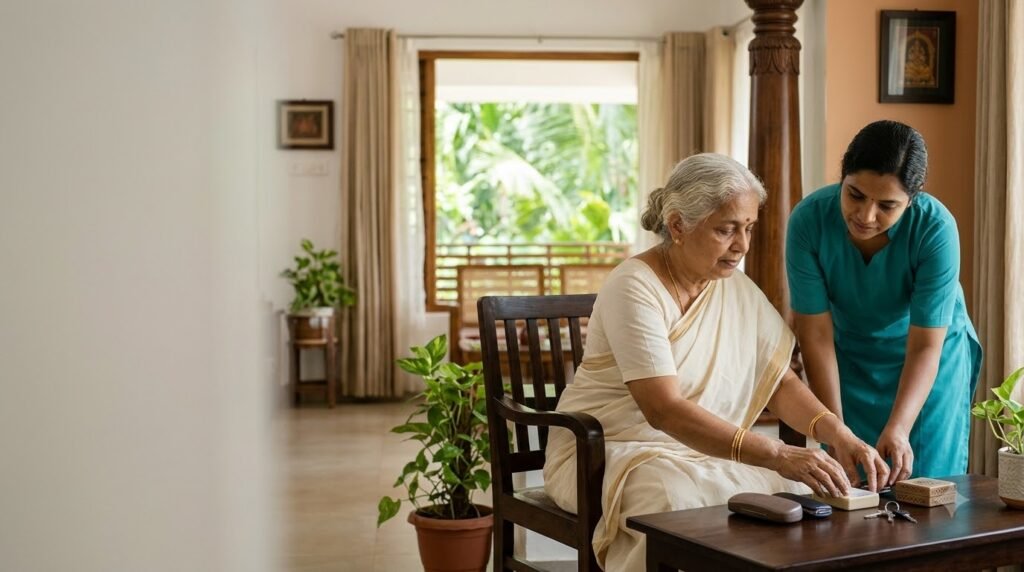
Vision plays an important role in everyday independence. People with reduced vision or blindness may find certain activities more difficult, including walking around unfamiliar spaces, preparing meals, identifying household items and managing personal belongings.
For elderly individuals, vision loss can also increase the difficulty of moving safely around the home.
With appropriate assistance and a well-organised living environment, visually impaired individuals can continue many daily activities with greater confidence and comfort.
Home-care assistance may benefit:
Elderly people experiencing age-related vision loss.
Individuals with significant visual impairment.
People who have difficulty managing daily activities independently.
Seniors who need assistance with personal hygiene and meals.
Individuals who live alone and require regular support.
Patients recovering from an eye-related medical procedure, when assistance is recommended
The type of support should depend on the individual’s vision, mobility, independence and personal care requirements.
A caregiver can help make everyday routines easier while respecting the person’s independence.
Reduced vision can make activities such as selecting clothes, grooming and bathing more challenging.
A caregiver can provide appropriate assistance with bathing, dressing, grooming and personal hygiene while maintaining privacy and dignity.
Moving around the house may become difficult when furniture, steps or other obstacles are not easily visible.
Caregivers can provide walking assistance when needed, help patients navigate familiar areas and keep commonly used pathways clear.
For people with significant vision loss, families should seek professional guidance on safe mobility techniques.
Identifying food items, handling kitchen equipment and preparing meals may require additional attention.
A caregiver can help arrange meals, prepare suitable food and assist during mealtimes according to the individual’s needs and dietary instructions.
Keeping essential items in consistent locations can make daily activities easier.
Caregivers can help organise clothing, footwear, toiletries, medicines and other frequently used belongings so that patients can locate them more easily.
Some individuals with visual impairment may find it difficult to read medicine labels or distinguish between similar packaging.
Caregivers can provide reminders based on a clearly organised medication plan prepared by the family or healthcare professional. Medicine identification, dosage decisions and administration requiring clinical expertise must be handled appropriately by qualified professionals.
Changes in vision can affect a person’s confidence and independence. Some individuals may become hesitant to participate in activities they previously enjoyed.
Regular interaction, patient assistance and friendly companionship can help them feel more comfortable with their daily routine.
A properly organised home can reduce unnecessary difficulties for someone with limited vision.
Families can consider the following steps:
Keep furniture in consistent positions.
Remove loose rugs and unnecessary obstacles.
Keep stairs and walking pathways clear.
Use adequate and consistent lighting where helpful.
Add contrasting colours to important edges and surfaces.
Keep essential items in clearly defined locations.
Use accessible labels or tactile markers where suitable.
Ensure that commonly used objects are easy to reach.
Avoid moving furniture or personal belongings without informing the individual. Familiar surroundings can make everyday movement easier.
Every person experiences vision loss differently. Some individuals may need occasional help with household activities, while others may require regular assistance with personal care and mobility.
Before arranging home care, families should consider:
The person’s level of visual impairment.
Their ability to move around independently.
Whether assistance is needed during meals and personal care.
Their existing medical and mobility requirements.
The type of caregiver support required.
Whether professional nursing assistance is also necessary.
Care should encourage independence rather than unnecessarily taking over activities the individual can perform safely.
Supporting a family member with visual impairment requires patience, understanding and attention to everyday safety.
Right Health Home Care provides home-care assistance for individuals and families in Kerala. If your elderly parent or loved one needs support with personal care, mobility, meals or daily activities, contact the team to discuss suitable care arrangements.
Yes. Individuals with visual impairment can receive assistance with personal hygiene, meals, mobility and other everyday activities based on their requirements.
A caregiver can provide suitable walking assistance when required. The level of support should depend on the individual's mobility and professional safety recommendations.
Families can keep pathways clear, maintain consistent furniture arrangements, improve suitable lighting and organise essential household items in predictable locations.
Yes. Caregivers can help with meal preparation, feeding assistance when needed, bathing, dressing and other personal-care activities.
No. Home-care assistance does not treat or reverse vision loss. Eye-related diagnosis and treatment must be provided by qualified eye-care professionals.
You can contact Right Health Home Care at +91 9895130559 to explain your family member's requirements and discuss available care options.
Contact Right Health Home Care
Phone: +91 98951 30559
