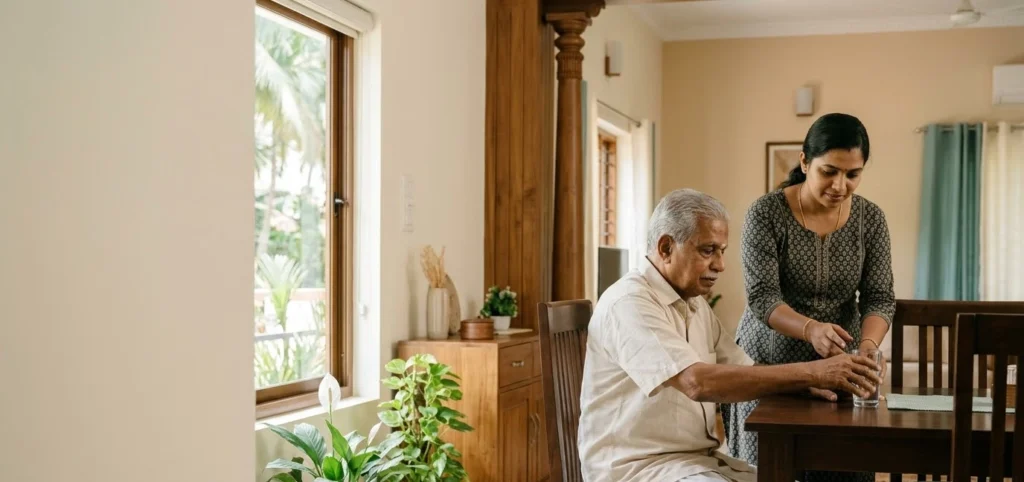
Visual impairment can make several everyday activities more challenging. People with reduced vision may find it difficult to identify objects, read labels, prepare meals, move around unfamiliar spaces or complete personal-care routines independently.
For elderly individuals, these difficulties may also increase concerns about falling or getting injured at home.
With appropriate assistance and a well-organised living environment, people with visual impairment can continue participating in many daily activities while maintaining their dignity and independence.
Home-care assistance may be useful for:
Elderly people experiencing reduced vision.
Individuals with partial or complete vision loss.
People who find household activities difficult because of poor eyesight.
Senior citizens who need assistance moving around their homes.
Individuals who live alone and require regular daily support.
The level of care should depend on the person’s vision, mobility, independence and individual requirements.
A suitable caregiver can help with everyday activities while encouraging the individual to remain involved in their own routine.
Some people with visual impairment may need support with bathing, dressing, grooming and other personal-care activities.
A caregiver can provide assistance while respecting the person’s privacy, preferences and independence.
Moving between rooms, using stairs and identifying obstacles can be challenging for people with limited vision.
Caregivers can provide appropriate assistance when walking around the home and help keep frequently used pathways clear.
Identifying ingredients, reading food labels and handling kitchen equipment may become difficult with reduced vision.
A caregiver can assist with preparing meals, arranging food and providing feeding assistance when required.
People with visual impairment may find it difficult to read medicine labels or identify different medication packages.
Caregivers can provide reminders and support with an agreed medication routine. Medication selection and dosage decisions must always follow instructions from qualified healthcare professionals.
Visiting hospitals, attending appointments or completing essential activities outside the home may require additional support.
A caregiver can accompany the individual when arranged as part of the care plan, helping them navigate unfamiliar surroundings.
Changes in vision can affect a person’s confidence and independence. Some individuals may avoid social activities because they feel uncomfortable moving around without assistance.
Regular companionship and patient support can help them remain connected with family members and everyday activities.
A properly organised home can make everyday movement easier and reduce unnecessary obstacles.
Families can consider:
Keeping furniture in consistent positions.
Removing loose rugs and objects from walking pathways.
Providing adequate lighting and reducing glare.
Using high-contrast labels where helpful.
Keeping essential items in clearly designated locations.
Installing suitable handrails where necessary.
Keeping frequently used belongings within easy reach.
Families should also consult an eye-care professional or vision rehabilitation specialist for recommendations suited to the individual’s level of vision.
Caring for a family member with visual impairment may require time, patience and consistent assistance. Family members may find it difficult to balance work, household responsibilities and caregiving.
Professional home-care assistance can help share these responsibilities by supporting personal hygiene, daily activities, mobility and companionship.
When choosing a caregiver, families should consider the person’s experience, communication skills, suitability and ability to understand the individual’s specific needs.
People with visual impairment deserve care that respects their independence, comfort and dignity.
Right Health Home Care provides personalised home-care assistance for individuals and families across Kerala. The team offers support with daily activities, personal care, mobility and companionship based on individual requirements.
If your elderly parent or family member needs additional assistance at home, contact Right Health Home Care to discuss suitable care options.
Yes. People with partial or complete vision loss may benefit from assistance with personal care, meals, mobility and everyday activities.
Yes. A caregiver can assist with daily routines, personal hygiene, meal preparation and moving around the home, depending on the individual's requirements.
Keeping pathways clear, maintaining consistent furniture positions, improving lighting and organising essential belongings can make the home easier to navigate.
Yes. Families can discuss appointment assistance and accompanying support when arranging a suitable home-care plan.
No. Home-care assistance does not treat or reverse vision loss. Eye-related diagnosis and treatment must be provided by qualified eye-care professionals.
You can contact Right Health Home Care at +91 9895130559 to discuss the person's daily requirements and available home-care assistance.
Contact Right Health Home Care
Phone: +91 98951 30559
