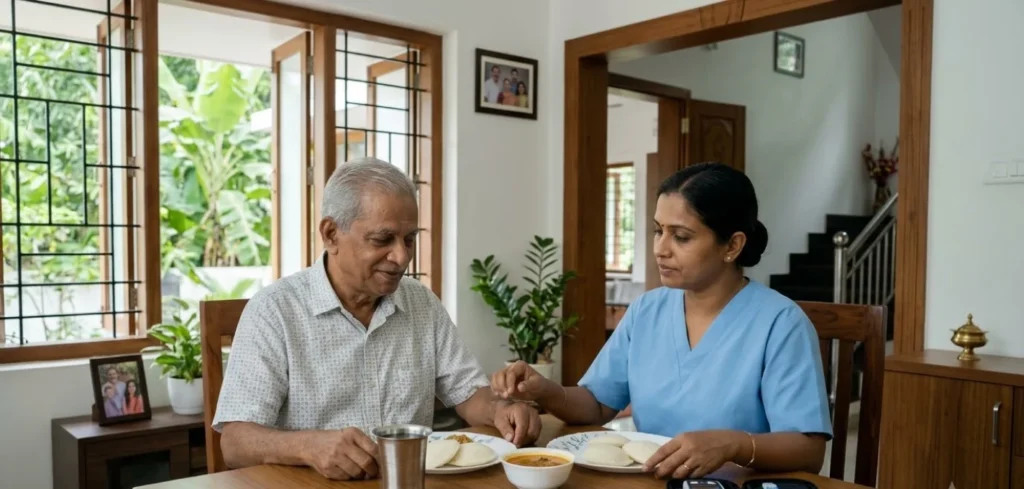
Living with diabetes often involves following a regular daily routine, attending medical appointments, taking prescribed medication and making lifestyle adjustments.
For elderly individuals and patients who have difficulty managing daily activities independently, additional support at home can make everyday life easier.
Family members may also need assistance when balancing work, household responsibilities and patient care.
Home-care support can help diabetic patients manage their daily routines while staying in a familiar and comfortable environment.
Not every person living with diabetes requires a caregiver. However, additional assistance may be useful for:
Elderly people living with diabetes.
Patients with limited mobility.
Individuals who need help with daily personal care.
Patients recovering from illness or surgery.
People who live alone and need assistance with everyday activities.
Patients whose family members cannot provide continuous support.
The level of care should depend on the individual’s health condition and recommendations from their healthcare professional.
A trained caregiver can assist with everyday activities according to the patient’s care requirements.
Maintaining a consistent routine can be important for people managing diabetes. A caregiver may help with daily schedules, meals and other agreed activities.
Some patients need assistance remembering their prescribed medication schedule. Caregivers can provide reminders according to the instructions given by the family or healthcare professional.
Medication decisions and dosage changes must always be handled by qualified healthcare professionals.
Patients may need help following their recommended meal schedule. A caregiver can assist with meal preparation or feeding, based on the patient’s dietary instructions.
A diabetes-specific diet should be planned with a qualified doctor or dietitian.
Elderly diabetic patients with limited mobility may need help with bathing, grooming, dressing and other personal-care activities.
Patients who have difficulty walking may require assistance with everyday movement. A caregiver can provide suitable support based on the patient’s physical condition and care plan.
Caregivers can communicate unusual changes in the patient’s general condition to family members. Any concerning symptoms should be reported promptly to an appropriate healthcare professional.
Foot care is an important part of diabetes management. Some people with diabetes may experience reduced sensation or circulation problems, making it harder to notice minor injuries.
Families should encourage patients to:
Check their feet regularly for cuts, blisters or swelling.
Keep their feet clean and dry.
Wear comfortable, properly fitting footwear.
Avoid walking barefoot.
Seek medical advice for wounds or unusual changes.
Any foot wound, infection or suspected complication should be assessed by a healthcare professional. Do not rely on routine caregiver assistance as a substitute for medical treatment.
Before arranging home-care assistance, families should consider the patient’s daily needs and level of independence.
Look for a service that offers:
Caregivers with suitable experience.
Assistance with personal hygiene and mobility.
Clear communication with family members.
Support based on the patient’s care instructions.
Access to qualified nursing professionals when clinical care is needed.
If the patient requires insulin administration, wound treatment or other medical procedures, confirm that appropriately qualified healthcare professionals are available.
Managing everyday activities can become challenging for elderly individuals and patients living with diabetes, particularly when they need additional personal assistance.
Right Health Home Care provides home-care assistance for individuals and families across Kerala. If your loved one needs help with daily activities, mobility or personal care, contact the team to discuss suitable support options.
Yes. Diabetic patients who need help with daily activities, mobility or personal care may benefit from suitable home-care assistance.
Caregivers may provide reminders based on the prescribed schedule and family instructions. Medication administration and dosage decisions require appropriate clinical guidance.
Not everyone does. However, elderly individuals who have limited mobility or difficulty managing daily activities may benefit from additional assistance.
Caregivers may help with routine hygiene, but diabetic foot wounds, infections and specialised treatment require assessment by qualified healthcare professionals.
5. How can I arrange home care for a diabetic patient in Kerala?
Contact Right Health Home Care
Phone: +91 98951 30559
